The Ultimate Test of Mind Over Body
I’ve seen it before.
They peer around the corner, anxiously sizing up the situation while their friends approach with that unique mixture of excitement and nervousness that only those who have experienced the coldest ice bath in Arugam Bay will truly understand.
It’s a fine line between joy and dread.
Dread, because the feeling of getting into a bath full of ice doesn’t exactly conjure up feelings of euphoria, but it’s the process that releases a torrent of chemicals into your body that rejuvenate you in a way like nothing else can.
There is something almost absurd about it when you think about it, the searing humid heat of Arugam Bay wrapping around you like a warm wet blanket, the sun hammering down, and here in the middle of it all sits a bath full of ice.
Something in the primal brain says this doesn’t quite add up.
And maybe that’s exactly the point.
The contrast is jarring, almost comic, and yet it is precisely that contrast, that collision between the heat outside and the cold within, that makes the whole thing so extraordinarily alive.
Wide eyed and white knuckled, the reluctant participant grabs the side of the bath.
“I can’t do it, I can’t do it,” they say, looking at me like a deer caught in headlights, shoulders rounded, thinking how the hell did I get here?
The ice bath is a test of mental fortitude.
It pushes your body and mind to their limits, and let’s be honest, it’s definitely not natural to submerge yourself in near freezing water.
It’s not our preferred habitat.
The mind is racing, and the first place to arrest that racing mind is the story we tell ourselves.
As I often say to would be participants “if you say you can or you say you can’t, either way you are right.”
Once you understand the process, what’s actually happening to the mind and body, that knowledge will change the story entirely.
I normally start by explaining that the first two minutes are the hardest.
Your mind is literally screaming at you, telling you something is wrong, and if you can’t feel anything there’s a problem.
Your body is experiencing an intense shock to the system and it’s dealing with it the only way it knows how, by releasing adrenaline and everything else in its arsenal to get you to move.
And that’s where mind over body either strengthens or weakens.
Your body can handle it, up to 20 minutes at least before it starts to truly protest, and again, that depends entirely on the stories we tell ourselves.
The great Wim Hof has stayed in an ice bath for an impressive 1 hour and 53 minutes.
Your body can handle 2 to 5 minutes. Trust me.
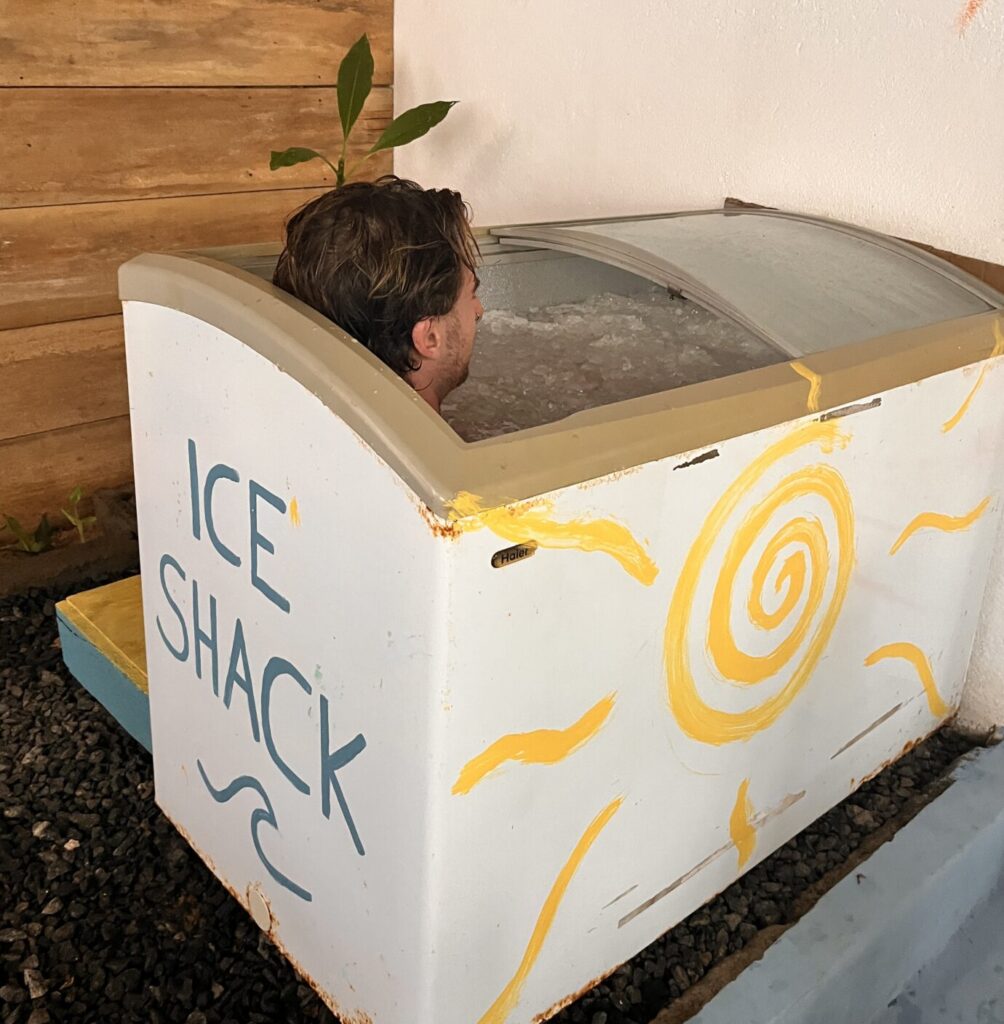
What’s actually happening
The moment your body hits ice cold water, an extraordinary chain reaction begins.
This is where the breath being used for nervous system regulation becomes your survival tool.
The sympathetic nervous system, your fight or flight response, activates instantly.
Within seconds your pupils dilate, your heart rate doubles and your blood pressure surges.
Your lungs force an involuntary gasp, a response so hardwired you cannot suppress it.
Blood vessels near the skin and limbs rapidly constrict, pulling blood away from your extremities and redirecting it to protect your vital organs.
Your muscles tense, shivering begins as your body desperately tries to generate heat, and goosebumps form across your skin as millions of sensory receptors fire simultaneously, sending an overwhelming signal to the brain.
Chemically, the body is in full survival mode. Adrenaline floods the system, noradrenaline spikes by up to 300%, cortisol releases and endorphins begin to build.
Your bronchioles dilate to pull in more oxygen, your brain enters a state of heightened hyper-awareness, and every survival mechanism your body possesses activates, all within the first two minutes.
It is one of the most complete full body stress responses a person can voluntarily and safely trigger, and that’s precisely where the benefits begin.
The same awareness used in an ice bath can also be practiced in everyday moments of stress, even something as simple as being stuck in traffic.
Before you get in, who should take care
Before we go further, a word on who should approach this with caution or avoid it altogether.
Cold water immersion is a significant cardiovascular event.
The sudden spike in heart rate and blood pressure means that anyone with a heart condition, high blood pressure, Raynaud’s disease, circulatory disorders, or a history of cardiac episodes should consult a doctor before attempting it.
The same applies to those who are pregnant, epileptic, or have open wounds or active infections.
This is not a disclaimer for the sake of it, it is genuine physiology.
The ice bath is a powerful tool precisely because it pushes the body hard. Respect that.
If in doubt, check with your doctor first.
For the vast majority of healthy people the risk is minimal and the reward is real, but know your body and know your history.
The Breath is everything
So how does anyone get through that? Through the breath.
The one physiological process we can consciously control, and through that control, we can begin to bring the sympathetic nervous system back to earth and activate its counterpart, the parasympathetic system.
It starts with the gasp.
The moment your body hits the water your lungs will force an involuntary intake of air, sharp, sudden and instinctive.
You cannot prevent it and you don’t need to.
That gasp is actually your starting point.
It is the signal.
The moment immediately after it is where everything is decided, because right there, in that split second, you have a choice.
You can follow that gasp into rapid shallow chest breathing, which will amplify the panic, accelerate the heart rate and make the mind scream louder for you to get out.
Or you can catch it, take ownership of the breath and begin to consciously change it.
Taking back control
That moment, of catching the breath and choosing to slow it down.
This the moment you begin to take control of your body, your chemistry and learn how to focus your mind.
It is the key to moving through the ice bath. Breathe in slowly through the nose, deep into the belly, and exhale out through the mouth, long and slow.
When you feel the breath coming under control, transition to breathing only through the nose.
Close your eyes. This is where music earns its place. Somewhere in the background, if you listen, Bob Marley is telling you don’t worry about a thing.
It sounds almost laughable when your body is screaming.
But give it a moment. Give the breath a moment, and watch what happens.
Somewhere between the gasping and the shivering, something shifts.
The shoulders drop a fraction.
The jaw unclenches slightly.
And then, almost without realising it, the lips start to move.
A murmur.
A hum.
Sometimes a laugh.
“Every little thing gonna be alright.”
And in that moment, in that bath, in that ice, it actually is.
Two minutes approaches faster than you could ever have imagined.
This works because of a remarkable piece of anatomy called the vagus nerve, which is also the longest nerve in the body.
Running from the brain through the heart, lungs and gut.
It is the primary highway of the parasympathetic nervous system.
The body’s rest and calm state.
Deep belly breathing stimulates it directly.
Nasal breathing produces nitric oxide, which relaxes and dilates blood vessels, directly countering the vasoconstriction the cold triggers.
The long slow exhale releases acetylcholine.
A neurotransmitter that slows the heart rate and quietens the stress response.
Cortisol begins to drop.
The gasping reflex is suppressed.
The mind shifts from “this is an emergency” to “I am in control.”
This is the remarkable reality of breath work in cold exposure.
You are consciously overriding one of the most powerful automatic survival responses the human body possesses.
Using nothing but the rhythm of your own breath.
The body remains cold, but the brain is no longer in panic mode.
This is mind over body through chemistry.
It is exactly what separates those who endure the ice bath from those who cannot.
The body is reacting, your job is simply to absorb that reaction and gently release the tension wherever it builds.
If you tap into your awareness you can actually feel it, tension rising in the shoulders, tightening in the hands.
It’s as clear as day once you become the observer rather than the participant.
A detective watching the story unfold.
The story says “I’m going to die” but you’re not going to die. So far, 100% survival rate.\
The Benefits
The benefits of regular ice bath practice extend far beyond what most people expect.
While the instinct is to think of cold exposure purely as a recovery tool for sore muscles, the reality is that a single session simultaneously benefits the body, the brain and the mind in ways that few other practices can match.
On a physical level, the cold rapidly reduces inflammation and muscle soreness by constricting blood vessels and flushing out lactic acid.
Speeding up recovery time between training sessions and reducing swelling in joints and tissues.
It is no coincidence that ice baths have been a staple of elite athletic recovery for decades.
But the physical benefits go deeper than sore muscles.
Repeated cold exposure acts like a workout for the cardiovascular system.
The repeated cycle of vasoconstriction and dilation strengthens blood vessels and improves circulation over time.
Brown fat is activated to generate heat, boosting the metabolism.
Insulin sensitivity improves.
The immune system responds by increasing white blood cell production.
Stimulating the lymphatic system to flush waste from the body more efficiently.
Chemically, the ice bath triggers one of the most powerful natural hormonal responses available to us.
Noradrenaline spikes by up to 300%, dopamine is released, endorphins flood the system and cortisol levels drop with regular practice.
This cocktail of chemicals is responsible for the euphoric, energised feeling most people report after a session.
A feeling that can last for several hours.
The noradrenaline boost in particular has attracted serious scientific interest.
Low noradrenaline levels are strongly linked to depression and anxiety.
Researchers are actively investigating cold exposure as a complementary treatment for both conditions, with early results showing genuine promise.
Cognitively the benefits are equally compelling.
The noradrenaline and dopamine sharpen focus, improve working memory and increase mental clarity for hours after the session.
Many high performers, athletes, executives and biohackers alike, have adopted morning cold plunges for precisely this reason.
Using the chemical boost as a natural alternative to caffeine or stimulants.
The brain enters a state of heightened alertness that feels clean and sustainable rather than jittery.
Perhaps the most underrated benefit is psychological.
Choosing to get in, and choosing to stay, is an act of deliberate voluntary discomfort.
Done repeatedly, this builds a form of mental resilience that carries into every area of life.
The practice trains the mind to recognize that discomfort is not the same as danger.
It can be observed, breathed through and mastered.
Vagus nerve tone improves over time, making the nervous system naturally calmer and more resilient.
Baseline anxiety reduces. Sleep deepens.
A word worth addressing honestly, there has been some discussion around whether ice baths are equally suitable for women.
Particularly in relation to the menstrual cycle.
The research here is still limited, and much of the existing cold exposure data has been gathered predominantly on men.
What the evidence does suggest is that cold immersion during menstruation may worsen cramping for some women.
The days immediately before and during a period may not be the ideal time for intense cold exposure.
That is worth knowing.
However, a large UCL study of over a thousand women found that nearly half of those with menstrual symptoms reported improvements in anxiety, mood swings and irritability through regular cold water exposure.
Like everything, context and moderation matter.
The ice bath is a stress on the body, a deliberate, beneficial stress, but a stress nonetheless.
Overdoing anything is rarely wise, whether that’s cold exposure, exercise, or eating too much food for example.
Used with awareness and reasonable frequency.
The evidence firmly suggests the benefits far outweigh the risks for the vast majority of people.
Listen to your body. It usually knows. This is the greatest gift of breath awareness.
It leads us to understanding the body and the signals it sends us.
A single session of as little as five to eleven minutes is enough to capture the majority of the benefits.
The body doesn’t need to suffer longer to gain more.
Research suggests that eleven minutes of total cold exposure per week, split across two to three sessions, delivers the most comprehensive results.
Consistency across the week matters far more than duration in any single session.
The barrier to entry is nothing more than cold water and the willingness to get in.
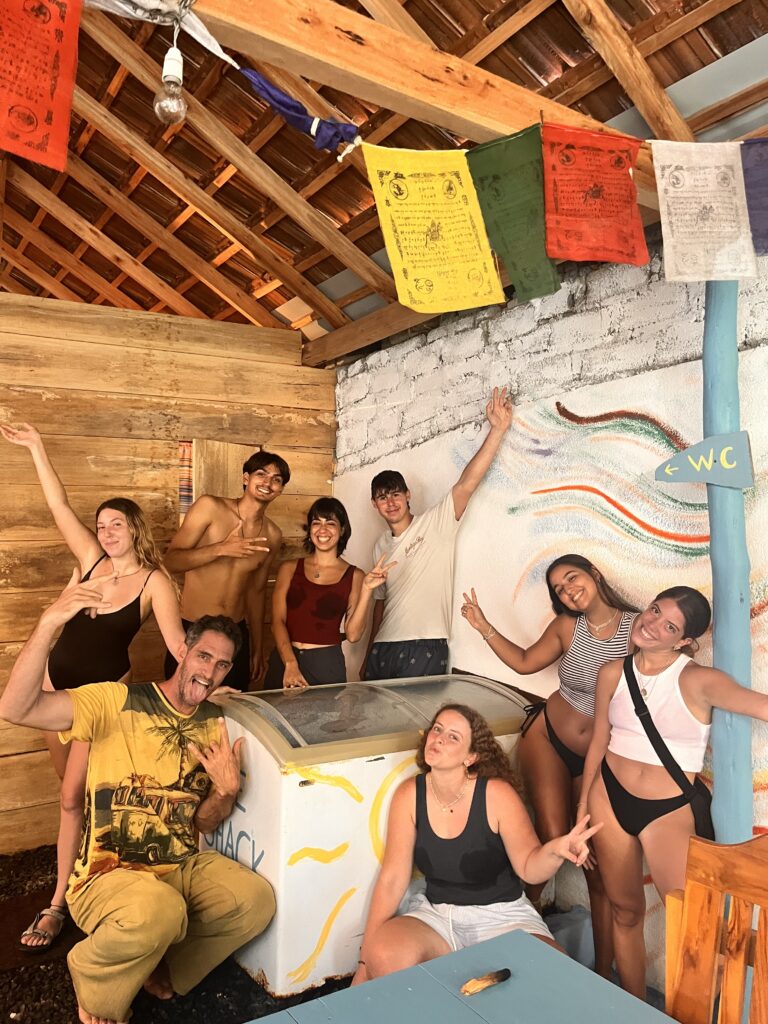
The other side
And when they finish? Wow. Nearly every time,”I can’t believe I did it.”
And for me, that’s the biggest eureka moment.
When you understand that the stories you tell yourself are not true.
No arguments, full doubt and full skepticism going in.
Through a little knowledge and a little technique, you achieve what you genuinely believed was impossible.
You are more powerful than you could ever imagine.
When you get out, move. Shake, jump, dance, whatever comes naturally, and something will.
The energy of the moment courses through you in a way that is difficult to describe.
Until you have felt it.
Your body has just fought hard to keep you alive and now, released from the cold, it surges.
Let it.
Move for ten to twenty minutes, not as a discipline but as a celebration.
The shivering and shaking is not weakness, it is your body generating heat through rapid muscle contraction.
Doing exactly what it is designed to do.
Work with it rather than against it.
Resist the temptation to jump straight into a hot shower.
Let your body rewarm itself naturally, the way it was built to.
A warm drink helps.
The movement helps more.
Somewhere in those first few minutes out of the bath, wrapped in that strange cocktail of exhaustion and electricity.
You feel something that is hard to put into words.
A real awareness of your body, what it is capable of and what it actually means to be alive.
Fully, completely, undeniably alive.
The science can explain the chemicals.
It cannot fully explain that smile.
But you will recognize it the moment you see it.
And if it’s your first time in the bath, you will recognize it the moment you feel it.
The elation, the sense of pride, the dopamine flowing, the shaking, the dancing, the pure bliss that follows, it’s undeniable.
It goes deeper into the fabric of your being, because you challenged yourself and you saw what was possible.
You showed up. You got in. And that is enough.
One Response